We use cookies to run this site and, with your consent, to understand how it is used and to follow up with companies interested in our work. You can change your choice at any time under “Cookie settings”. Cookie Policy · Privacy Policy · Imprint
Solar panels, heat pumps and EV chargers bring new grid connection requests, each requiring technical checks and a quote under regulated tariffs. Storms trigger alarms and customer updates. Millions of meter readings need validation before billing.
Our AI agents validate connection applications, coordinate outage notifications and check meter data across your SCADA, GIS, meter-data and ERP systems. Less manual case handling, faster responses, with engineering decisions firmly in human hands.
AI agents check each connection request, run the capacity study, prepare the regulated offer and register the installation in GIS. Your planners focus on the cases where the grid is congested.
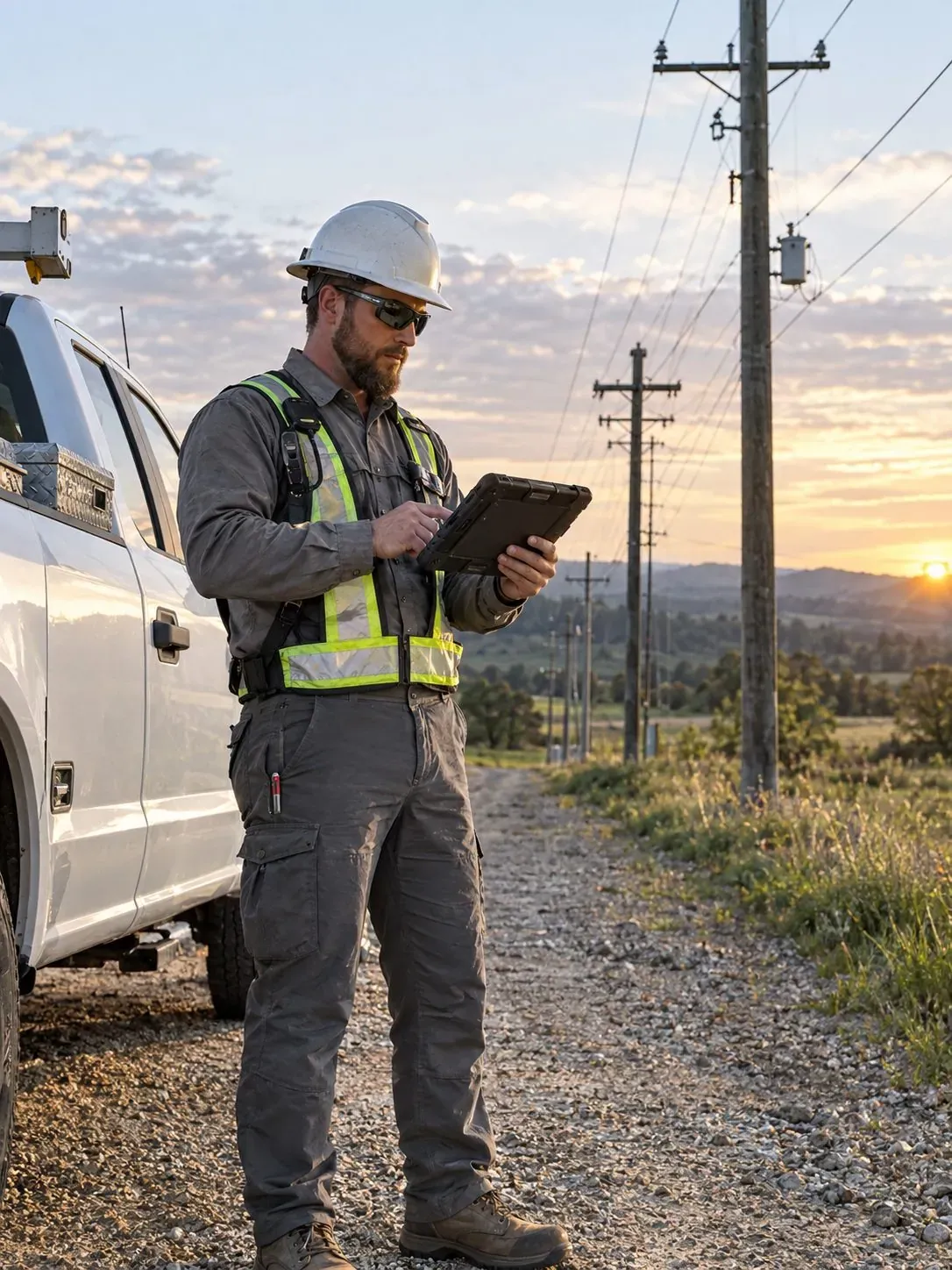
When an outage hits, AI agents prepare the work order, the permit and the crew schedule. Crews head out with everything ready, and engineers approve each step.
Work orders · Permits to work · Crew scheduling
Renewable share of electricity · EU, 2022 to 202541% to 50%. More variable power, more events to detect and explain.
As variable power grows, AI agents triage SCADA alarms, classify each outage, notify affected customers and assemble the quality-of-supply return. Your control room engineers stay focused on the network.
Alarm triage · Outage communication · Quality-of-supply reporting
* Our fastest go-live. Timelines depend on the complexity of the project and its processes.
INSIDE A NETWORK UTILITY
Custom agents, built for every
department of the utility.
We don't deploy generic software. We design AI Agents around the processes, tools and people of each function, then connect them where it matters. Click any department to explore.
Grid Connections & Capacity
Requests validated, capacity checked, offers out in days.
Agents read connection requests from portal and email, check completeness, prepare the capacity study, price the offer under the regulated tariff, register distributed generation in GIS and keep the queue and its expected dates current, so planners decide the congested cases.
Automation potential69–79%
Connection Request Intake & Validation
Network Capacity Study Preparation
Connection Offer & Quotation
Congestion & Queue Management
Distributed Generation Registration
Network Planning & Investment
Forecasts current, candidates ranked, the plan ready for the regulator.
Agents combine meter data, connection requests and scenarios into area forecasts, rank replacement candidates by condition and risk, draft investment memos from unit rates, keep the network model consistent with the field and assemble the regulatory investment plan. Engineers own the design decisions.
Automation potential68–78%
Load & Generation Forecasting
Asset Replacement Prioritization
Investment Case Preparation
Network Model Maintenance
Regulatory Investment Plan Submission
Grid Operations & Control
Alarms triaged, outages classified, every customer informed.
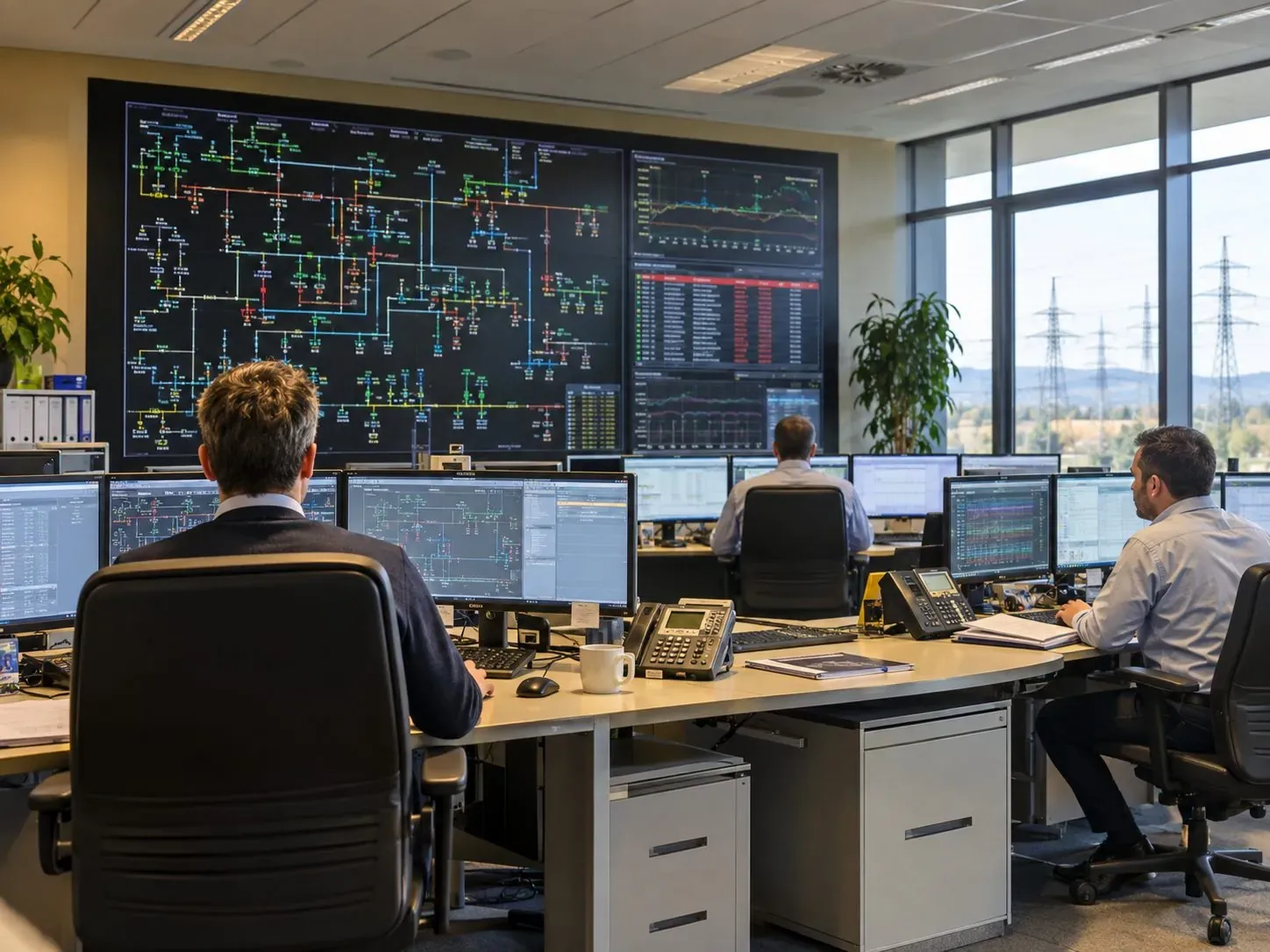
Agents filter nuisance alarms, correlate SCADA events, last-gasp signals and calls into outage records, propose the fault section, notify affected addresses by SMS, app and web, draft switching schedules for approval and compute the quality-of-supply return. Dispatchers keep the switching decisions.
Automation potential71–81%
Alarm Triage & Event Logging
Outage Detection & Classification
Outage Communication
Switching Schedule Preparation
Quality of Supply Reporting
Asset Maintenance & Field Service
Work packages ready, permits drafted, crews where the work is.
Agents generate work orders from maintenance plans, assemble the work package with materials, drawings and permits, draft permits to work for authorization, match crews to jobs by skill and location, turn inspection photos into defects and verify contractor work before invoicing.
Automation potential68–78%
Preventive Maintenance Scheduling
Work Order Preparation & Dispatch
Safety Documentation & Permits to Work
Field Workforce Scheduling
Inspection Report Processing
Metering & Data Management
Every read validated, every switch processed, settlement reconciled.
Agents monitor read completeness, apply validation and estimation rules under market rules, process supplier switches and moves through market communication, keep metering-point master data correct and reconcile metered volumes with settlement, so the metering team handles the exceptions.
Automation potential74–84%
Meter Data Collection Monitoring
Meter Data Validation & Estimation
Supplier Switching Processing
Metering Point Administration
Settlement & Reconciliation
Customer Service & Billing
Questions answered, bills right, disputes resolved on time.
Agents answer connection, outage, meter and bill questions from the knowledge base and case data, calculate and check bills against plausibility rules, investigate disputes from billing and meter history, match payments to open items and run the legal reminder sequence. Vulnerable-customer cases are routed to people.
Returns assembled, deadlines met, every obligation tracked.
Agents collect data from source systems into the regulator's templates, check consistency across reports, answer data requests against earlier submissions, scan regulator and EU publications for changes, allocate costs to regulated activities and track performance against incentive schemes.
Agents check contractor certificates and insurance before work starts, create call-offs from work orders within framework ceilings, match invoices to orders and receipts, extract bid data into the evaluation sheet and compute supplier scorecards on delivery, quality and safety.
Automation potential73–83%
Contractor Onboarding & Qualification
Framework Contract Call-Offs
Invoice 3-Way Matching
Bid Evaluation Support
Supplier Performance Scorecards
Sustainability, Safety & Environment
Incidents logged, SF6 tracked, the CSRD statement drafted.
Agents capture incident and near-miss reports and route them, track safety and contractor certificates and block assignments without them, maintain the SF6 inventory and leakage rates, compute Scope 1 to 3 emissions from activity data and draft CSRD disclosures with the evidence for assurance.
Automation potential67–77%
Incident & Near-Miss Reporting
Contractor Safety Compliance
SF6 & Gas Inventory Tracking
Scope 1 to 3 Emissions Calculation
CSRD & Sustainability Reporting
Finance & Controlling
The close on time, capex capitalized, the RAB reconciled.
Agents run the close checklist and recurring journals, reconcile balance-sheet accounts, capitalize project costs and transfer completed projects to fixed assets, track the regulated asset base against the register, process supplier invoices and build the cash forecast.
Certificates valid, rotas within the rules, onboarding done.
Agents track the technical certifications field staff need and block assignments without them, build control-room and field rotas within labor rules, administer onboarding, process time and attendance and answer policy questions. Hiring and appraisal decisions stay with people.
Alerts triaged, patches scheduled, NIS2 evidence in place.
Agents enrich and classify security alerts across IT and OT, prioritize vulnerabilities and schedule patches within maintenance windows, monitor the interfaces between SCADA, GIS, MDM and ERP, provision and review access and keep the NIS2 and network-code obligations register with its evidence.
Agents run inside your infrastructure, on-prem, private cloud or hybrid. No data leaves your network without your approval. No dependency on us: it runs on infrastructure you control. The agent is yours to run, permanently.
You pay for the process automated, not consulting hours. If a process proves non-automatable, a voucher covers the next one.
03
From 12 weeks · fastest go-live
Our fastest projects go live from 12 weeks; the plan for yours comes out of discovery, because it depends on the process and the systems it touches. Payback within one year for the large majority of projects.
Answers before the first call: the questions grid operators, COOs and regulatory teams ask us most.
Can agents touch our OT environment and SCADA?
Agents run entirely inside your environment: on-prem, private cloud or your own hybrid setup, and they follow the same IT/OT segmentation you apply to people. In the control room they read SCADA and ADMS data, triage alarms and prepare switching schedules for approval; they do not execute switching. Every access and every output is logged, which is what NIS2 and the Network Code on Cybersecurity expect.
Do we need to replace our SCADA, GIS, meter-data or ERP systems?
No. Our agents sit on top of your SCADA/ADMS, GIS, meter-data management, work-management, customer and ERP systems and treat them as the systems of record they already are. Where an integration does not exist, agents operate through the same interfaces your staff use today.
Your people. Agents validate, prepare, draft and check; the planner approves the capacity study, the dispatcher approves the switching schedule, the authorized person issues the permit to work. We keep a human in the loop on every safety-relevant and regulatory step regardless of the technical possibility.
What do the automation potential figures mean?
They measure technical automation potential: how much of the human work in a process is technically automatable at full deployment with clean, integrated data. They are not a forecast of headcount reduction and not a promise of realized savings. Physical field work and engineering judgment are not counted.
We do not automate them. Under the EU AI Act, screening candidates and evaluating performance are high risk and require human oversight. Agents schedule, track certificates and document; hiring, appraisal and promotion decisions stay with your managers.
How do you price, and how long does it take?
Fixed price per workflow automation. If during delivery we determine a process cannot be automated, you receive a voucher to automate a different process instead. Our fastest projects go live from 12 weeks; the plan for yours comes out of discovery, because it depends on the process and the systems it touches.